
Designing for Efficiency, Beauty, and Strength
A well-designed home is not only about floor plan and appearance. It must take into account the lay of the land, the direction of the sun, the views, the trees, the prevailing weather, the slope of the site, and the natural features of the property all deserve to influence the final design.
Carlos DaCosta
4/10/20266 min read
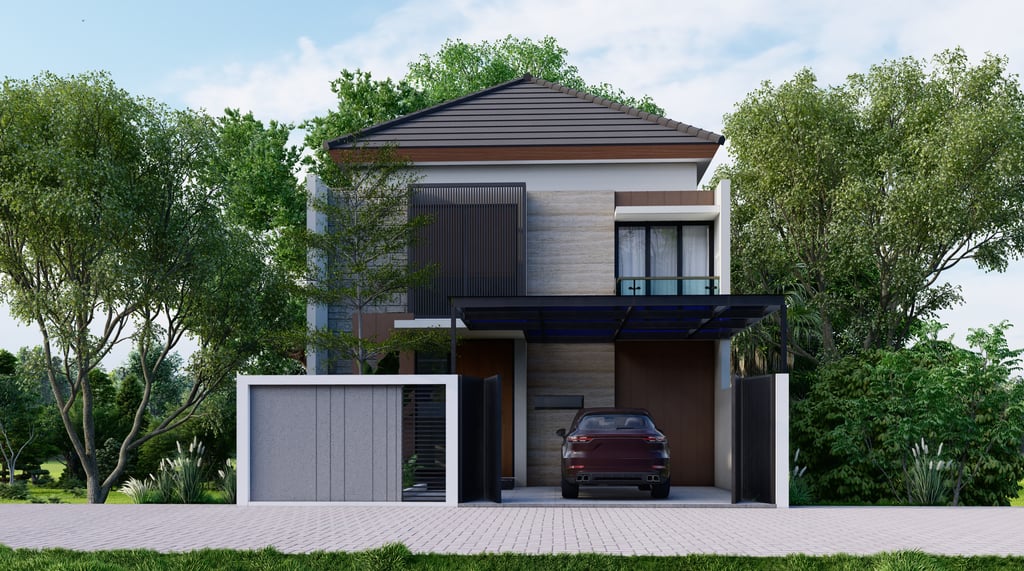
Why good home design begins with place, climate, light, and the way people truly live
Too many homes are designed as though they could be dropped anywhere.
The plan may look attractive on paper. The rooms may meet a client’s immediate wishes. The exterior may follow a fashionable style. Yet the design often has little real conversation with the land it sits on, the climate it must endure, or the daily experience of the people who will live there.
That is a mistake.
A home should not be designed only from the inside out. It should also be designed from the outside in. The lay of the land, the direction of the sun, the views, the trees, the prevailing weather, the slope of the site, and the natural features of the property all deserve to influence the final design.
When they do, the result is often far more than practical. It becomes comfortable, efficient, pleasing, and deeply right for its setting.
When they do not, even an expensive house can feel awkward, wasteful, and strangely unsettling.
A house should belong to its place
In the Upper Midwest, where winters are long and severe and summers can be hot and intense, design decisions matter greatly. A home here must do more than simply provide shelter. It must respond intelligently to very different conditions across the year.
That begins with orientation.
Where does the sun rise?
Where does it move across the property?
Where will winter light come from?
Where will shade be most needed in summer?
Where are the best views?
Where are the winds strongest?
What parts of the land feel open, protected, exposed, or calm?
These questions should not be secondary. They should help shape the design from the beginning.
And yet many homes are still designed with too little attention to these matters. Sometimes the architect is working from far away. Sometimes a standard plan is adapted with only minor changes. Sometimes the focus stays almost entirely on room count, square footage, or outward appearance, while the house’s relationship to the land is treated as an afterthought.
That is one of the reasons so many homes feel generic rather than grounded.
Beauty alone is not enough
A beautiful yard is a gift. A nice view is worth respecting. But good design is not simply about turning the biggest windows toward the prettiest scene and hoping for the best.
I have seen houses where the largest windows were placed to the north because that was where the most attractive part of the property was found. The choice made visual sense, but it ignored the climate. In a cold northern region, large north-facing openings can bring greater heat loss and a colder interior feeling, even when modern glazing is used.
South-facing windows, by contrast, can do valuable work in winter. They admit low-angle sunlight during the colder months, and that sunlight can warm interior spaces far more than many people realize. When planned properly, this is not a small matter. It affects comfort, energy use, and the general feeling of the home.
This does not mean every large window must face south, or that views should be ignored. It means design must balance beauty with performance.
That is what thoughtful architecture does.
Good design is a conversation
The best homes are not forced onto a site. They emerge from a conversation between needs, land, climate, light, structure, and daily life.
A family may want openness, privacy, connection to the outdoors, a sheltered entry, a second floor, a quiet office, better summer shade, or more winter sun. Those desires are all valid. But they should not be answered in isolation. They should be arranged into a whole that works together.
A window is not only a window. It is also:
a source of light
a source of heat gain or heat loss
a frame for a view
a contributor to comfort
and part of the emotional feeling of a room
A roof overhang is not only a roof overhang. It may also:
shade summer sun
allow winter light
protect walls
shape the character of the building
and improve the comfort of the spaces beneath it
A home’s placement on the land is not only a matter of access. It influences drainage, exposure, privacy, wind protection, outlook, and how the building feels from the moment one arrives.
This is why design is not merely drawing rooms in a convenient arrangement. It is the careful joining of many decisions, each affecting the others.
Why some houses feel right — and others do not
Most people may not describe these things in technical language, but they feel them immediately.
One walks into a well-considered house and senses calm, balance, proportion, light, and ease. The rooms feel natural. The house feels welcoming. Even if the visitor cannot explain why, the response is instinctive:
This is a nice house. It feels good.
The opposite is also true.
Some houses feel oppressive, dark, awkward, overheated, exposed, or closed in. They may be expensive and well-finished, yet still feel wrong. The proportions are uncomfortable. The light is poorly handled. The views are missed. The circulation feels forced. The orientation works against the climate instead of with it.
Again, people may not always analyze these things consciously. But they feel them.
A well-designed home does more than function. It supports the inner ease of the people living in it.
Flexibility matters too
Good design must also be flexible.
People do not all live the same way. One family may want an open main living space and private upper rooms. Another may want everything on one level. One person may want greater connection to the landscape. Another may care more about shelter, privacy, and lower maintenance. Budgets differ, priorities differ, and life changes over time.
A strong building system should not force one rigid answer.
That is why flexibility in design matters so much. It should be possible to shape a home according to the needs of the client, the nature of the site, and the character of the place without giving up structural strength.
A home can be designed to feel open without feeling weak.
It can respond to views without ignoring the sun.
It can provide beauty without losing practicality.
It can allow growth, adaptation, and different arrangements without becoming wasteful or confused.
True flexibility is not disorder. It is intelligent freedom.
Strength and design do not have to oppose each other
One of the misunderstandings in housing is the idea that stronger building systems somehow limit design possibilities. In reality, strength and design freedom do not need to be in conflict.
A good system should allow the designer to think about:
orientation
window placement
room relationships
roof form
levels and overhangs
privacy and openness
site response
and long-term comfort
all while maintaining structural integrity.
The goal is not to choose between strength and livability.
The goal is to unite them.
That is especially important in climates where houses must face cold winters, hot summers, storms, and long-term wear. In such conditions, every design decision carries more weight. A house should not only look good at completion. It should continue to feel right and perform well through the seasons and through the years.
Planning wisely from the beginning
Many problems in homes begin not with bad intentions, but with incomplete thinking at the design stage.
A room may be too dark because window placement was driven by appearance alone.
A house may feel cold because orientation ignored the winter sun.
A summer living area may overheat because shading was not considered early enough.
A beautiful view may be captured, but at too high a cost in comfort or efficiency.
A floor plan may satisfy an immediate wish while overlooking how the home will actually feel to live in every day.
This is why the early stages matter so much.
Before building begins, the best question is not simply:
What do we want to fit into the house?
It is also:
What kind of life do we want the house to support, and how should it sit in its place to do that well?
That is where wiser design begins.
A home should do more than shelter
A good home does more than protect from weather. It should also:
welcome light in the right way
support comfort naturally
respond to the land
make sensible use of energy
feel calm and balanced
and give lasting satisfaction rather than daily irritation
This is not about luxury. It is about care.
When a house is thoughtfully planned, it often gives more than the owners first expected. It feels easier to live in. It feels more settled. It feels more at peace with itself and with its surroundings.
That quality cannot be reduced to square footage alone. It comes from judgment, orientation, proportion, material choice, and respect for place.
Building better means seeing more
Design flexibility is valuable only when it is guided by wisdom.
The best homes are not simply those that fit the most features into a plan. They are the ones that bring together land, light, climate, structure, comfort, and human need in a coherent way.
That is why designing a home properly requires looking at more than immediate practicality. It requires seeing the whole picture.
When that happens, the result is not only a house that works.
It is a house that feels right.