
ABOUT
Built Different — From the Inside Out
Atlas Dome Homes was created to solve a problem most homeowners don’t realize exists — until it’s too late.
The person behind the build
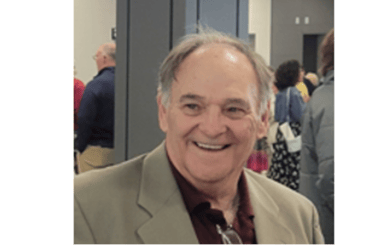
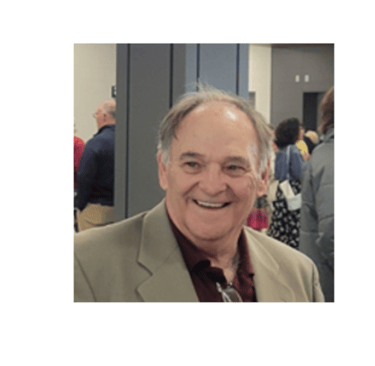
My name is Carlos DaCosta. I studied construction engineering in England and have spent my career building across Europe and the United States — houses in France, restoration projects in England, and a large log-home in Wisconsin. Building is not new to me. What is new is the opportunity to do it better.
For several years, I worked as a site manager on dome home projects with one of the few builders in the country that has constructed this type of home for over 40 years. Working on those projects taught me exactly what these structures can do. It also taught me exactly where they fall short.
The existing approach — concrete cast in panels and fiberglass molds, walls backfilled with soil, domes protected only by a rubber membrane — has not changed in decades. The homes are strong, but they are also expensive to maintain, difficult to finish, and frankly, they look like bunkers. Homeowners I have spoken with have dealt with serious problems: membrane failures, difficult repairs, and finishes that require far more work than they ever anticipated.
I believed there was a better way. So I developed one.
A patented system — built from the ground up
The core structural innovation at Atlas Dome Homes LLC is a patented construction method for building reinforced concrete domes without the use of a temporary mold. Every other dome home builder in the United States relies on these molds — a system that has remained essentially unchanged for 40 years.
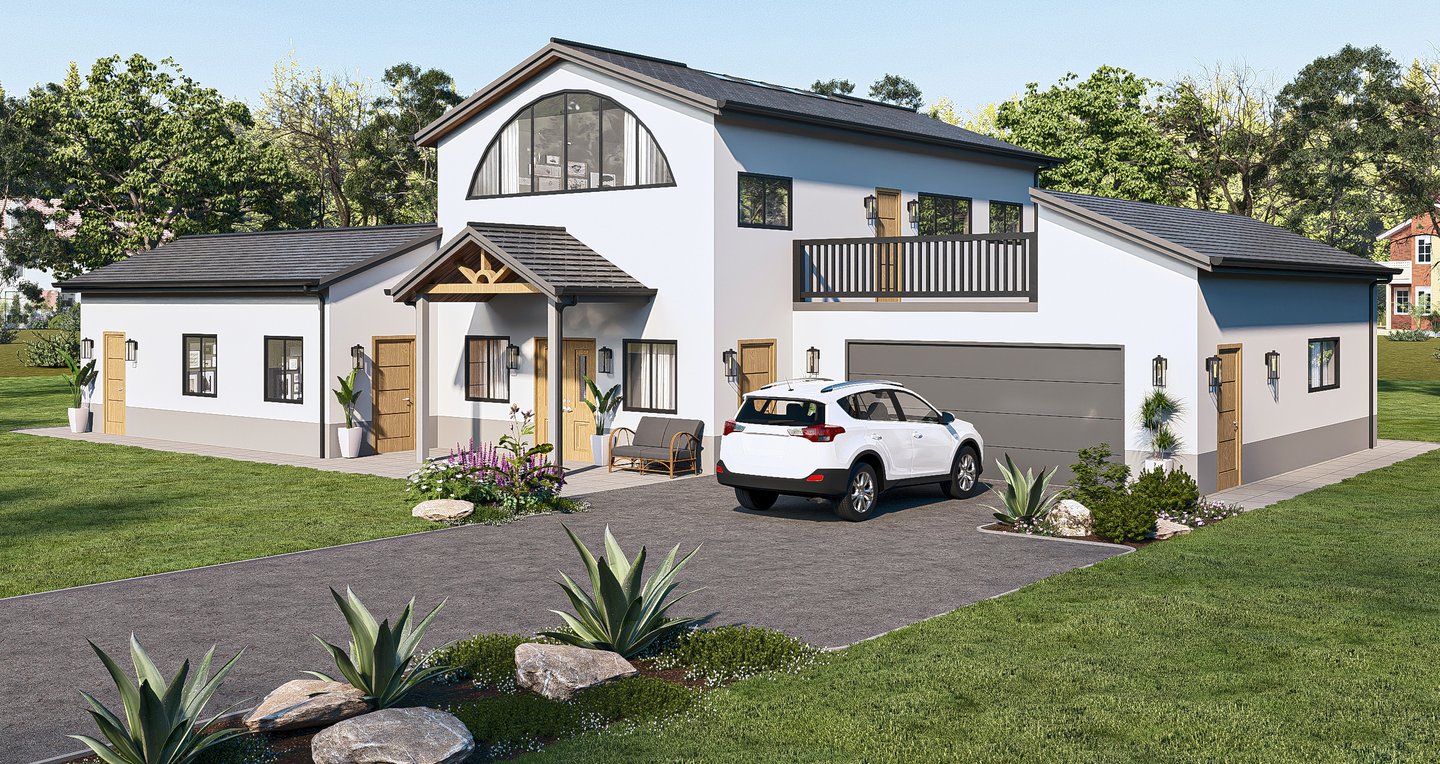
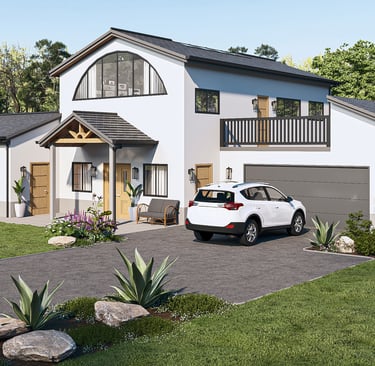
Our approach is different from the very first pour. The concrete walls are cast between interior and exterior EPS panels, which remain in place as permanent insulation — built into the wall rather than added later. The reinforced concrete dome is then fully insulated and finished with a standard framed roof — shingles, metal panels, or tiles — the same materials you would find on any well-built home in your neighborhood.
There is no exposed concrete. No rubber membrane stretched over a dome and left to face the elements, the freeze-thaw cycle, and wildlife. No backfilled soil pressing against walls that were never designed to be maintained.
When the structural phase is complete, a homeowner simply installs windows and doors and begins their interior fit-out. Plumbing and electrical work run through standard framing — no pipes or conduits cast into concrete, no costly core drilling, no compromises.
Where we are now
Atlas Dome Homes is at the start of something truly exceptional that will only be within reach of a select number of clients. The system has been developed, engineered, and patented, and is ready to be built. What we are looking for now are the right first clients — people who understand that being part of history has its benefits, and who will receive the kind of focused attention and direct involvement that later customers may never experience in the same way.
If you are exploring a home that will still be standing — and still performing — in a hundred years, I would like to talk.
I am a British citizen of Portuguese descent, and I have been building homes in the United States since 2006. This is not a corporate venture. It is a craftsman's project — and I stand behind every part of it.
Carlos DaCosta
Founder, Atlas Dome Homes
Atlas Dome Homes combines traditional architectural beauty with advanced reinforced concrete construction — engineered to a standard that simply does not exist anywhere else in the United States.
We Think Differently About It.
Concrete Doesn't Have to Look Like Concrete
At Atlas, some of the materials that form the structure become the finishes you live with.
Mention a concrete building and most people form an immediate picture.
A bridge. A parking structure. A factory. A highway overpass. Perhaps a large institutional building with vast gray walls.
Concrete has earned its reputation as one of the great structural materials of the modern world. But somewhere along the way, we began to associate the material with the appearance of the structures in which we most often see it.
The two are not the same thing.
Concrete has no particular architectural shape of its own.
Concrete becomes the shape of whatever we ask it to become.
Pour it into a straight form and it creates a straight wall. Pour it around a curve and it follows the curve. Change the form, and you change the architecture.
That simple fact is at the heart of the Atlas Construction System.
What If the Formwork Didn't Have to Be Thrown Away?
Traditional concrete construction generally requires forms to hold wet concrete until it develops sufficient strength. Those forms perform an essential job — but frequently a temporary one.
They are installed, the concrete is placed, and eventually much of the formwork is removed.
Then another process begins.
The completed concrete structure may need insulation. Interior surfaces may need framing or lining. Ceilings need finishing. Mechanical systems must be incorporated. Additional materials and labor are required to turn the structural shell into a comfortable building.
At Atlas, we asked a different question:
What if the materials used to shape the concrete could continue working after the concrete had cured?
That question changed the way we approached the entire building.
Our Finishes Can Begin as Our Molds
An Atlas home is not conceived as a concrete shell that must subsequently be disguised.
Many of the materials surrounding the concrete are selected because they can perform more than one job.
Insulating materials can help form the concrete and remain as part of the thermal envelope.
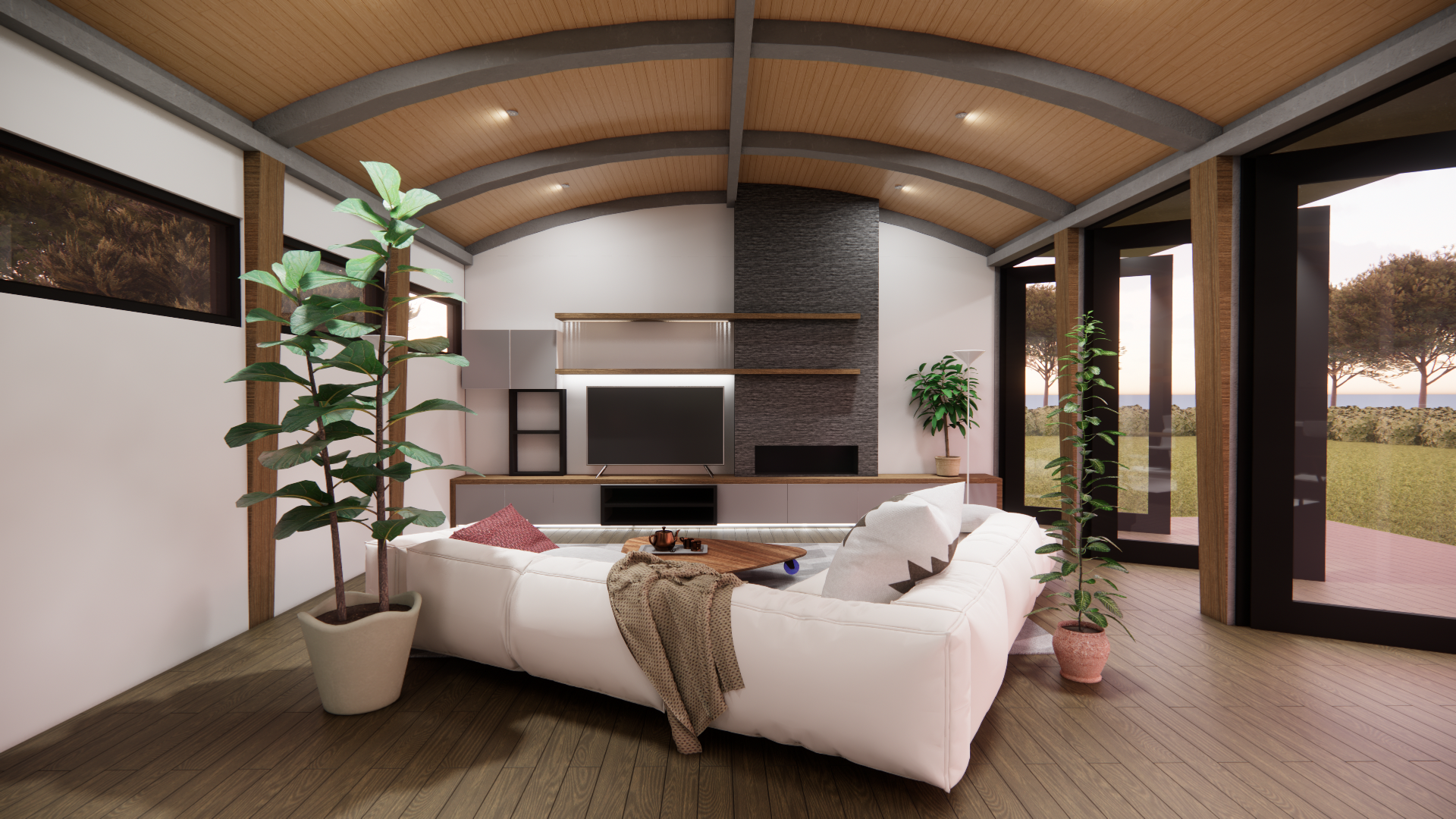
The beautiful curved wood surface beneath an Atlas dome is not simply decoration applied afterward. It can participate in forming the dome above it and then remain permanently in place as the finished ceiling below — while the geometry of the dome itself allows considerable architectural freedom in the treatment of the spaces between the structural.
The homeowner doesn't look upward and see the temporary mold that once created the concrete dome.
They see a warm, finished wood ceiling.
Yet during construction, that same surface helped us create the structure above it.
That is a very different way of thinking about formwork. A very different way of using a future building material as a mold from the very beginning — saving time, reducing unnecessary steps, and ultimately creating a more efficient building.
The wood helps create the concrete structure.
The formwork becomes part of the finished building.
Unnecessary construction operations are eliminated.
Build Once. Make It Do More.
This philosophy extends beyond what you can see.
Insulation can be incorporated into the structural assembly rather than treated simply as something to add later. Systems such as underfloor heating can be planned into the floor assembly from the beginning rather than approached as an afterthought.
The objective is straightforward:
If we must install a material or component during construction, can we make it perform two jobs instead of one?
Every time the answer is yes, there is an opportunity to eliminate another operation later.
That can mean fewer separate construction stages, less discarded temporary material, fewer trades returning to cover work that has already been completed, and a building that emerges from structural construction considerably closer to its finished condition.
Concrete Is the Structure. It Doesn't Have to Be the Atmosphere.
This may be the greatest misconception surrounding concrete homes.
People sometimes assume that choosing concrete means choosing concrete interiors — hard surfaces, gray walls and an industrial atmosphere.
Atlas turns that assumption around.
The concrete provides what we want from concrete: mass, strength, permanence and structural continuity.
But the spaces in which people actually live can be warm, curved, textured and inviting.
Wood can meet concrete.
Insulation can become formwork.
Formwork can become finish.
Structure and architecture don't have to be created as unrelated layers.
They can be designed together from the beginning.
And the Dome Is Only the Beginning
Although the dome is perhaps the most recognizable expression of Atlas construction, the underlying principle is much broader.
The Atlas Construction System has been developed as a versatile method capable of adapting to different building configurations and applications, from homes to appropriate commercial structures.
That versatility comes from something remarkably simple:
Concrete will take the shape we give it.
The real innovation lies in deciding what we use to give it that shape — and what those materials can continue doing for the building afterward.
Perhaps concrete was never limited to bridges, factories and monumental buildings.
Perhaps we simply needed to think differently about the molds.
Conclusion
At Atlas, the mold doesn't necessarily disappear when the concrete is finished.
Most of the time, it becomes the home.


We Don't Just Build with Concrete.
Atlas Dome Homes
Stronger. More efficient. Built to last for generations.
The Knowledge Center
Thoughtful articles and practical insights on stronger homes, resilient design, and better building choices.
- Beyond Conventional Housing -
ATLAS DOME HOMES
Tel: +1-(507)-933 4552
email: info@atlasdomehomes.com
Mankato, MN 56001. USA