Lightning and Your Home: Should You Be Concerned?
A direct strike is not the only threat. Even nearby lightning can send powerful electrical surges through utility lines, damaging appliances, computers, televisions, and other electronics. A whole-house surge protector is a device installed at the main electrical panel, which can help reduce that risk. Always combined with proper grounding. Still, many people think, "Why worry? The chances are very small."
Carlos DaCosta
6/4/20263 min read
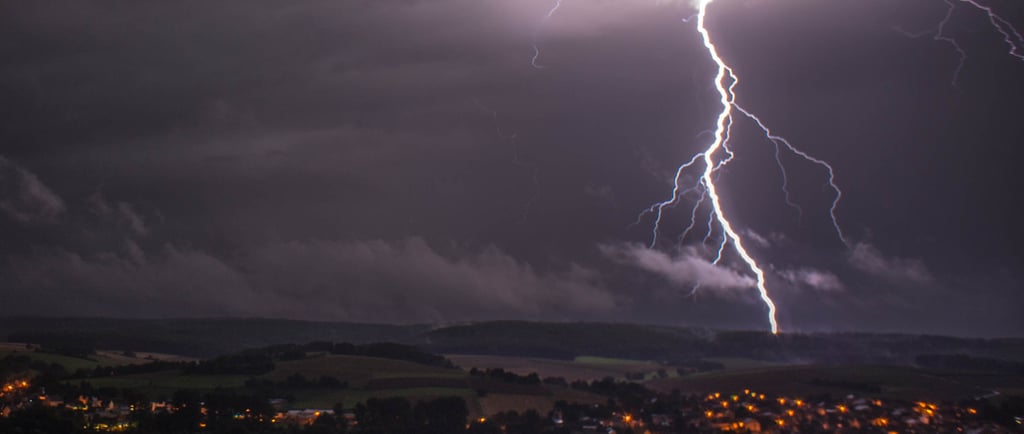
Most of us have watched a thunderstorm from the safety of our homes. The dark clouds roll in, lightning flashes across the sky, and a few seconds later comes the rumble of thunder. It can be beautiful, fascinating, and sometimes frightening.
But what exactly is lightning?
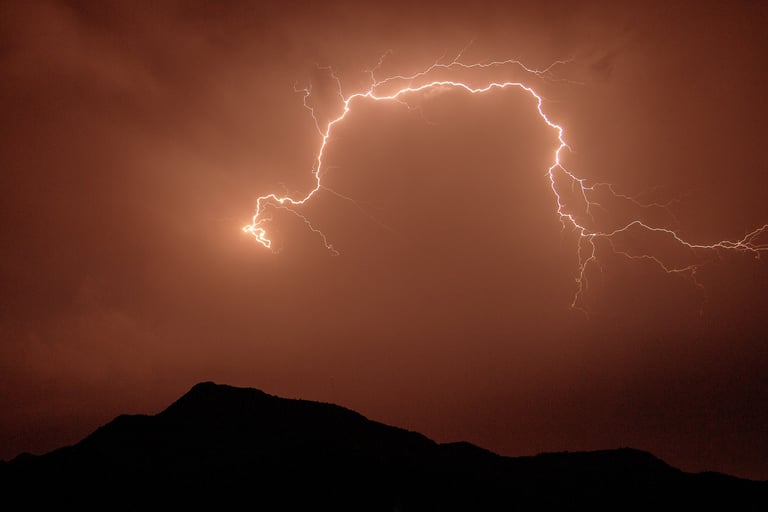
In simple terms, lightning is nature's way of balancing electrical charges. As storm clouds move and grow, they build up enormous amounts of electrical energy. When the difference in charge becomes great enough, electricity suddenly jumps through the air. That flash of electricity is what we call lightning.
Many people imagine lightning as a bolt that travels
from the clouds straight to the ground. In reality, most
lightning never reaches the ground at all.
Much of it travels from cloud to cloud, within a cloud,
or even upward into the atmosphere.
Nature is far more complex than most of us realize.
I learned this firsthand while sailing offshore many years ago. During one particularly severe storm, my sailboat's mast was the highest point for miles around. I expected that if lightning struck anywhere, it would strike my mast. Yet I watched lightning leap between clouds, flash across the sky, and on one occasion strike the sea perhaps fifty meters from my boat.
For a split second, I felt something difficult to describe—a shock, a spasm, or perhaps simply the body's reaction to being so close to such immense energy. When the storm had passed, my radio no longer worked. Whether the damage came through the antenna or from the electrical energy generated by the nearby strike, I cannot say for certain. What I learned, however, was that lightning does not always behave as we expect, and it does not need to strike your property directly to cause damage.
This is an important lesson for homeowners.
While height certainly increases the chances, it is not a guarantee. Lightning follows complex paths that depend on atmospheric electrical conditions, moisture, terrain, nearby structures, and countless other factors.
Because lightning is unpredictable, protecting your home is not about eliminating risk—it is about reducing it.
A direct lightning strike can cause fires, damage electrical systems, destroy appliances, and create costly repairs. Even a nearby strike can send powerful surges through power lines, telephone cables, and electronic equipment.
Fortunately, there are several ways homeowners can improve protection:
Proper grounding of the home's electrical system.
Whole-house surge protection devices.
Surge protectors for valuable electronics.
Lightning protection systems for homes in high-risk areas.
Regular inspection of electrical and grounding systems.
Lightning Doesn't Have to Hit Your House
Some homeowners may think, "Why worry? The chances are very small." A common misconception is that lightning must strike a home directly to cause damage. A nearby strike can send powerful electrical surges through utility lines, damage appliances and electronics, start fires, or affect electrical systems throughout a property.One of the most effective ways to protect a home's electrical system is a whole-house surge protector. These devices are installed at the main electrical panel and act as a first line of defense against voltage spikes.
Popular examples include:
Siemens FirstSurge series
Eaton CHSPT2ULTRA
Square D HEPD80
Leviton Type 1 and Type 2 Surge Protective Devices.
While no device can guarantee complete protection from a direct lightning strike, a properly installed surge protector can significantly reduce the risk of damage to appliances, computers, televisions, HVAC systems, and other expensive electronics.
For the best protection, whole-house surge protection should be combined with quality grounding, proper bonding of electrical systems, and plug-in surge protectors for sensitive equipment.
Lightning rods and the Myth
One of the most common myths is that lightning rods attract lightning. In reality, lightning rods do not pull lightning from the sky. Their purpose is to provide a safe path for electrical energy to travel into the ground if a strike occurs.
Think of a lightning rod as a safety valve. It does not create the storm; it simply helps manage the consequences if lightning chooses your property.
The truth is that no system can guarantee complete protection from nature. However, sensible preparation can significantly reduce the risk of damage and improve safety for your family.
Thunderstorms are a reminder of how powerful nature can be. While we cannot control the weather, we can take practical steps to protect our homes and those who live in them.
One of the most common questions homeowners ask is where to place a lightning rod. Many imagine a single rod in the middle of the roof. In reality, most modern lightning protection systems use multiple rods and grounding points designed to protect the entire structure. The objective is not to attract lightning but to provide a safe path to the ground if a strike occurs.
Preparation is not about fear. It is about being ready.