The Growing Search for Better Housing Alternatives
More people are looking beyond conventional housing in search of homes that are easier to maintain, more energy-efficient, and more dependable over time. Interest in better housing alternatives is growing as families place more value on durability, comfort, and long-term practicality.
Carlos DaCosta
4/9/20265 min read
Why are more people looking beyond conventional construction
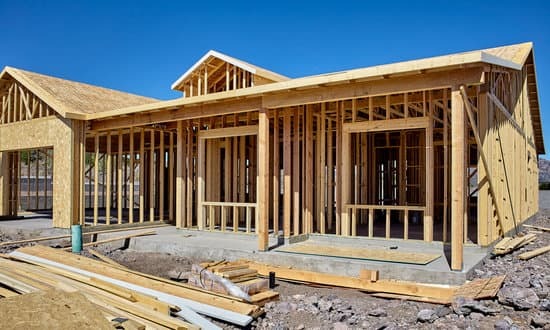
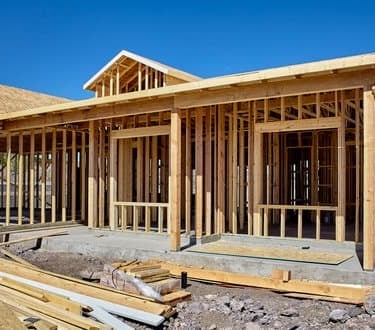
For generations, most people accepted conventional housing as the obvious and almost unquestioned standard. A house was simply a timber-framed structure, built in the usual way, with the usual materials, and with the usual problems that came along with it. Repairs, maintenance, weather damage, aging roofs, damp basements, insulation shortcomings, and rising energy bills were all treated as part of ordinary home ownership.
But more and more people are beginning to look at housing differently.
The search for better housing alternatives is not driven by one single cause. It comes from a combination of concerns that many families now share: cost, durability, maintenance, efficiency, safety, and a growing sense that conventional building methods no longer answer every need as well as they once seemed to.
In a world of rising material costs, increasingly unpredictable weather, and greater awareness of how differently homes are built across the globe, many people are beginning to ask a simple question:
Is there a better way to build a home for the future?
Changing expectations
Part of this shift comes from changing expectations. People are no longer looking only for a house that looks attractive on the day they move in. They are thinking more seriously about what happens over the next twenty, thirty, or fifty years.
How much maintenance will the home require?
How well will it stand up to storms, heat, cold, moisture, insects, and fire?
How much will it cost to heat and cool?
How often will major parts of the home need repair or replacement?
And perhaps most importantly, how secure and comfortable will it feel as time passes?
These are not small questions. For many families, a home is the largest single investment they will ever make. It is not unreasonable to want that investment to offer more than just appearance and short-term convenience.
The limits of accepted building habits
In the United States especially, timber-frame construction became normal because it was fast, practical, and supported by abundant local lumber. Entire industries, trades, supply chains, and financing systems developed around that method. Over time, what was practical gradually became what was expected.
Yet familiarity is not always the same as superiority.
Many people live in homes that require continual upkeep. Roofs wear out. Exterior materials age quickly. Moisture finds its way into vulnerable areas. Wood can rot, shift, crack, or become damaged by insects. Severe weather can do tremendous harm in a very short time. Fire remains one of the greatest risks any homeowner faces.
Because these weaknesses have been around for so long, people often stop questioning them. They are treated almost as facts of life.
But they are not laws of nature. They are consequences of a chosen method of construction.
That realization is leading more people to explore alternatives.
Why alternatives are drawing attention
The interest in alternative housing is growing because alternatives often promise what conventional housing struggles to provide: greater strength, longer life, lower maintenance, better thermal performance, and in many cases, a greater sense of permanence.
Some people are drawn to natural building systems, including earth-based methods, because of their simplicity, mass, and long history. Others are interested in masonry, insulated concrete systems, reinforced concrete construction, or hybrid methods that combine structural strength with improved comfort and energy performance.
Not all alternatives are equal, and not every method suits every climate, budget, or lifestyle. But the growing interest itself says something important. It tells us that many people are no longer satisfied with the idea that one standard method should fit everyone.
A family living in a tornado-prone region may value storm resistance far more than stylistic convention.
A couple planning a forever home may care more about durability and low maintenance than quick construction.
A homeowner concerned about energy use may begin looking beyond surface insulation values and start thinking about thermal mass, airtightness, and long-term operating costs.
Each of these concerns leads to the same larger conclusion: the house of the future may need to be built differently from the house of the past.
From cheap to sensible
Interestingly, many people begin their search thinking mainly about cost, but over time they often come to see that the deeper issue is not simply building cheaper, but building more sensibly.
A lower upfront cost can be attractive, but if the home requires constant upkeep, higher energy use, repeated repairs, and major replacements over the years, then the true long-term cost may be far higher than it first appeared.
This is where many housing alternatives begin to make real sense.
A stronger structure may cost more at the beginning, but less over time.
A better-insulated and more thermally stable home may reduce energy costs year after year.
A more durable shell may protect not only the building itself, but also the family’s sense of security and the long-term value of the property.
When people begin to think in those terms, the conversation changes. The goal is no longer to build the cheapest house possible. The goal becomes building a house that is wiser, stronger, and better suited to real life.
Safety is no longer a secondary concern
Another reason alternatives are gaining attention is that safety is no longer a background issue for many families. Storms are stronger. Weather patterns are less predictable. In some regions, wildfire has become a serious concern. In others, flooding, hurricanes, and tornadoes have made people reconsider what kind of structure they want to depend on.
A home is not only a financial investment. It is also the place people trust to protect their lives, their children, and everything they have worked for.
That changes the way many people think.
Strength, resilience, and permanence stop being optional extras. They become part of the core purpose of the building.
This is one reason why reinforced concrete, insulated wall systems, and shelter-oriented ideas are receiving renewed attention. They answer concerns that many families now feel more strongly than previous generations may have done.
Why Atlas Dome Homes fits into this search
Atlas Dome Homes was created with these concerns in mind.
The aim was never simply to build something unusual for the sake of being different. The aim was to respond to real problems with a more durable and thoughtful solution.
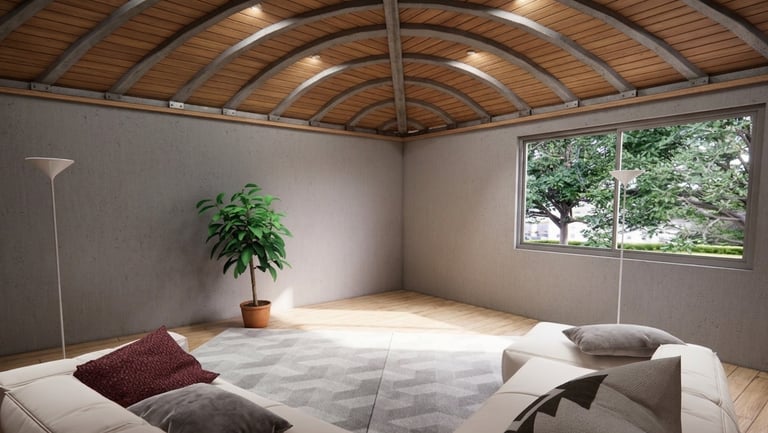
Our homes are built with reinforced concrete from top to bottom. The structure is designed for strength, longevity, and reduced maintenance. The wall system uses insulated concrete forms for strong thermal performance. The dome ceiling uses our patented finishing approach, so the client is not left with an unfinished shell that still demands major interior expense. Above the dome, a traditional roof system provides familiar exterior appearance and finishing options, while the space between the dome and roof structure adds further insulation.
In other words, the idea is not to reject comfort, beauty, or practicality. It is to combine them with strength and long-term common sense.
Atlas also extends this thinking into family storm shelter concepts that can be attached to an existing house, offering a practical approach to safety without the disadvantages that can come with deep underground solutions.
A broader shift in thinking
The growing search for better housing alternatives is about more than new materials or new building techniques. At its heart, it reflects a broader shift in thinking.
People want homes that match the realities of modern life.
They want homes that are easier to live in, easier to maintain, more efficient to operate, and more dependable in uncertain conditions.
They want homes built with greater respect for durability, comfort, and long-term value.
And many are beginning to realize that these goals may require looking beyond what has simply been accepted as normal.
The future of housing will not belong to one single method alone. But it is clear that more people are willing to question old assumptions, compare alternatives more carefully, and seek solutions that offer something better.
That search is already underway.
Concrete construction approach
Conventional lumber framing